Zentec Motor
Choosing the best AC Gear Motor from China requires more than comparing catalog prices. The correct choice depends on torque, speed, duty cycle, voltage, noise, and installation conditions. A motor that performs well on a test bench may struggle beside a dusty conveyor or under frequent starts.
Dr. Austin Hughes, a respected author on electric motors and drives, offers a useful selection principle: “Choose the motor and gearbox as one working system, not as separate parts.” This idea matters when evaluating Chinese manufacturers. The gearbox ratio must match the actual load. The motor should provide enough starting torque without overheating. Bearing quality, gear material, sealing, and thermal protection also deserve close attention.
Factory evidence is valuable. Ask for rated torque curves, efficiency data, insulation class, noise readings, and endurance-test records. Examine the assembly line, winding process, and final inspection procedures when possible. ISO certification can support credibility, but it does not replace product testing. Request a sample before placing a large order. Measure temperature rise after continuous operation. Listen for abnormal gear noise. Check whether the output shaft remains stable under changing loads.
There is no universal winner. Some suppliers offer excellent customization, while others mainly compete on price. That distinction can be easy to miss. A reliable AC Gear Motor supplier explains limitations clearly and supports spare parts after delivery. I would also question any quotation that promises high torque, low noise, tiny size, and the lowest price simultaneously. Real engineering involves trade-offs. The best decision comes from verified performance, transparent communication, and a gearbox designed for the application.
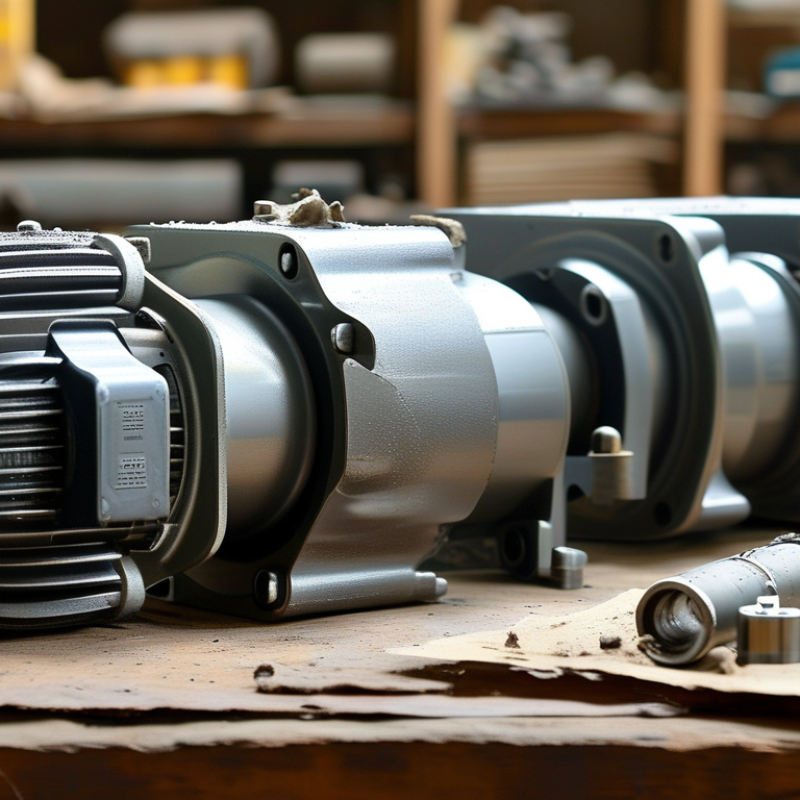
An AC gear motor combines an alternating-current motor with a gearbox. The motor creates rotation, while the gears reduce speed and increase usable torque. This structure suits conveyors, mixers, shutters, and compact automated equipment. Its output shaft turns more slowly. Inside, key parts include the stator, rotor, bearings, seals, gears, and housing. The housing protects the transmission from dust and helps control vibration.
A practical evaluation starts with load, speed, duty cycle, voltage, and mounting space. Torque must cover startup resistance, not only the running load. For example, a small conveyor may need extra torque when a heavy box reaches an incline. Gear ratio determines output speed, but efficiency also matters. Worm gears can be compact and quiet, yet they may produce more heat. Heat matters. Helical gears often deliver better efficiency, although their price and installation demands can rise.
When comparing Chinese suppliers, request test data, insulation class, noise readings, and a clear dimensional drawing. Ask how the motor performs after repeated starts. That detail often exposes weak thermal design. Check rated torque, permissible radial load, braking needs, and service access. A reliable supplier should explain tolerances and provide traceable inspection records. I would not choose by price alone. One overlooked issue is backlash. It can affect positioning accuracy. The selection process is not perfect; real-site temperature and dust can differ from laboratory conditions. A short pilot test may reveal problems earlier than a polished specification sheet.
What Is the Best AC Gear Motor from China?
Key Types of AC Gear Motors Made in China
Chinese manufacturers produce several practical AC gear motor types for conveyors, mixers, gates, and packaging equipment. The best choice depends on load, speed, mounting space, and duty cycle. Helical gear motors offer efficient power transfer and steady operation. They suit conveyor lines that run for many hours. Worm gear motors provide high reduction ratios and compact right-angle installation. However, they may lose more energy through heat. That detail is often underestimated.
Planetary gear motors deliver high torque in a small housing. They fit demanding machinery with limited installation space. Bevel gear motors change the power direction efficiently, especially in angled conveyor systems. Coaxial gear motors support simple alignment and smooth transmission. In real workshops, selecting only by rated power often causes trouble. Starting torque, shaft load, brake needs, and ambient temperature also matter.
Tips: Request the motor curve, gearbox ratio, noise data, insulation class, and IP rating. Check whether test documents match the supplied model. Ask for sample testing under your actual load. A short trial can reveal vibration, heating, or weak braking. Do not trust attractive specifications alone. Supplier communication matters, but recorded inspection results matter more. Also confirm mounting dimensions before ordering. A small mismatch can delay installation and increase modification costs. I would also review spare-part availability, because even a reliable motor eventually needs seals, bearings, or a replacement capacitor.
Selecting the best AC gear motor starts with the working load, not the catalog power rating. A 0.75 kW motor may handle a conveyor smoothly, yet struggle during startup. Check continuous load, starting resistance, duty cycle, and ambient temperature. Measure the required torque at the gearbox output.
where T is torque in newton-metres, P is power in kilowatts, and n is speed in revolutions per minute.
Torque matters most when a machine starts or changes direction. Speed matters after the load reaches motion. A high reduction ratio increases output torque but lowers output speed. It can also increase heat. Check the gearbox ratio, rated output torque, and allowable radial load.
Small details matter. I once saw a motor selected by shaft speed alone. It ran quietly without load, then overheated under production weight.
Efficiency needs a wider view. Compare motor efficiency, gearbox losses, and the controller’s electrical demand together. Ask for test data, insulation class, protection rating, noise limits, and temperature-rise results.
Verify the nameplate against the quotation. Samples should run under realistic load for several hours.
Record current, casing temperature, vibration, and output speed.
A supplier’s test sheet helps, but independent checks remain valuable. Specifications can look precise and still miss the actual working condition.
What Is the Best AC Gear Motor from China?
A reliable AC gear motor begins with controlled manufacturing, not attractive pricing. Chinese manufacturers should demonstrate ISO 9001-based quality procedures and follow relevant IEC motor standards. Ask for test records covering voltage, current, torque, speed, temperature rise, and insulation resistance. These records should identify the production batch. Traceability matters when a motor fails months later.
A dependable motor should offer stable torque, low operating noise, durable gears, and suitable thermal protection. Check the duty cycle, gearbox ratio, shaft size, mounting position, and enclosure rating before ordering. A sample test under your actual load is more useful than a polished catalog. Certification helps, but it is not complete proof. Testing can still reveal vibration, heat buildup, or unexpected backlash. This is where many purchasing decisions become too optimistic.
Tips: Request a sample, a dimensional drawing, and a written inspection plan. Confirm how rejected parts are handled. Ask whether final testing uses calibrated equipment. Compare performance at startup, continuous load, and repeated reversing. Keep communication specific. Small details matter. Also, allow room for reflection: a low-cost motor may reduce the initial budget, yet inconsistent gears can increase maintenance and downtime. Reliable manufacturers usually explain limitations honestly, provide clear warranty terms, and support engineering changes with documented evidence.
| Evaluation Dimension | Reliable Specification or Practice | Why It Matters | Recommended Verification |
|---|---|---|---|
| Motor Type | Induction motor or capacitor-run motor selected according to the required starting torque, speed, and duty cycle. | Different AC motor designs provide different starting performance, efficiency, noise levels, and control options. | Check the motor construction, wiring diagram, rated torque, starting torque, and application load profile. |
| Rated Voltage and Frequency | Common industrial configurations include 110–120 V or 220–240 V at 50/60 Hz. Three-phase versions commonly use 220–240 V or 380–415 V at 50/60 Hz. | Correct electrical compatibility prevents overheating, poor starting, and premature winding failure. | Confirm the nameplate, wiring configuration, frequency tolerance, and required supply before ordering. |
| Output Power | Typical small and medium AC gear motors range from approximately 6 W to 3 kW, depending on the gearbox size and application. | Power must be sufficient to overcome the load while allowing reasonable thermal margin. | Compare rated output power with calculated load torque, speed, acceleration, and operating time. |
| Gear Ratio | Common reduction ratios range from about 3:1 to 300:1. Multi-stage gearboxes are used for higher reduction ratios. | The ratio determines output speed and influences output torque, efficiency, and gearbox size. | Request the actual output speed at rated frequency rather than relying only on the nominal ratio. |
| Output Torque | Torque should be specified in N·m at the actual output speed. A service factor is normally required for shock loads and frequent starts. | Torque is the key selection factor for conveyors, actuators, mixers, doors, and positioning equipment. | Verify continuous torque, peak torque, permissible radial and axial loads, and the gearbox service factor. |
| Efficiency | Efficient designs should state motor efficiency and gearbox efficiency separately. Actual values vary with power, speed, ratio, and load. | Higher efficiency reduces energy consumption, heat generation, and long-term operating cost. | Request test results at rated load and confirm whether the figures follow IEC test methods. |
| Insulation System | Class F insulation is widely used for industrial AC motors; Class H may be selected for higher thermal stress. | Insulation class indicates the winding temperature capability and helps determine thermal reliability. | Check the insulation class, winding resistance, dielectric strength test, and temperature-rise report. |
| Ingress Protection | IP54 is a common minimum for protected industrial environments; IP55 or higher is preferable where dust or water exposure is expected. | The IP rating defines protection against solid particles and water ingress. | Confirm the complete motor-and-gearbox assembly rating, shaft seal design, and test documentation. |
| Operating Mode | S1 continuous duty is suitable for continuous operation at a constant load. Intermittent duties should be identified using the applicable duty cycle. | Using the wrong duty rating can cause excessive temperature rise and shortened service life. | Match the rated duty to operating hours, starts per hour, load pattern, and ambient conditions. |
| Thermal Protection | Thermal protectors, thermal switches, or embedded temperature sensors are recommended for applications with overload or frequent starting. | Protection reduces the risk of winding damage caused by overload, stalled operation, or inadequate cooling. | Confirm the protection device type, trip temperature, reset method, and control-circuit compatibility. |
| Noise and Vibration | Low-noise performance depends on gear precision, bearing quality, balancing, lubrication, and assembly accuracy. | Excessive noise or vibration can indicate poor alignment, gear backlash, bearing defects, or imbalance. | Request noise and vibration limits measured under defined speed, load, and distance conditions. |
| Gearbox Construction | Hardened or heat-treated gears, properly supported shafts, sealed bearings, and suitable industrial grease or oil are preferred. | Gearbox construction affects load capacity, wear resistance, backlash, service life, and maintenance requirements. | Review gear material, hardness, bearing arrangement, lubrication type, allowable backlash, and shaft-load limits. |
| Material and Corrosion Protection | Steel or aluminum housings may be used according to strength, weight, heat dissipation, and environmental requirements. Coatings should suit the operating environment. | Appropriate materials improve mechanical strength and resistance to humidity, chemicals, and corrosion. | Check housing material, coating process, corrosion test method, fastener material, and storage protection. |
| Manufacturing Quality Control | A dependable production process includes incoming-material inspection, winding checks, gear inspection, assembly control, and final functional testing. | Process control reduces variation between batches and improves consistency in torque, noise, temperature, and service life. | Ask for inspection plans, calibration records, traceability procedures, and sample final-test reports. |
| Electrical Safety Tests | Routine testing commonly includes winding resistance, dielectric withstand, insulation resistance, no-load current, and running performance. | These tests identify winding faults, insulation defects, wiring errors, and abnormal current draw before shipment. | Request test records linked to the motor serial number or production batch. |
| Applicable Standards | Specifications should reference relevant IEC motor and rotating-machine requirements, gearbox safety requirements, and the electrical regulations of the destination market. | Standards provide a common basis for dimensions, ratings, testing, safety, and documentation. | Verify the exact standard edition, scope of certification, certificate validity, and whether the certificate covers the supplied model. |
| Energy Efficiency Documentation | Where energy efficiency is regulated, the supplier should provide the applicable efficiency class, rated efficiency, test method, and operating conditions. | Efficiency claims can differ significantly depending on speed, load, frequency, and measurement method. | Compare test data with the relevant regional energy-efficiency requirements and declared operating point. |
| Customization Capability | Useful options may include shaft dimensions, mounting position, brake, encoder, terminal-box orientation, cable length, voltage, ratio, and special seals. | Correct customization improves mechanical integration and reduces the need for adapters or redesign. | Approve a technical drawing and sample unit before mass production. |
| Warranty and Spare Parts | A reliable supplier should define the warranty period, exclusions, claim process, replacement policy, and availability of wear parts. | Clear after-sales terms reduce downtime and uncertainty during the product life cycle. | Review the written warranty, recommended spare-parts list, maintenance instructions, and response time. |
| Best Overall Selection Criteria | Choose the motor that meets the required torque, speed, duty, protection, thermal, safety, documentation, and lifecycle-cost requirements—not simply the lowest purchase price. | A technically suitable motor normally provides better reliability, lower maintenance cost, and more predictable performance. | Use a documented comparison matrix and validate the final specification with a production sample or application test. |
What Is the Best AC Gear Motor from China?
How to Select the Best AC Gear Motor for Your Application
Choosing the best AC gear motor starts with the machine, not the catalog. Define the required torque, output speed, voltage, duty cycle, and mounting position. A conveyor running eight hours daily needs different protection from a small ventilation system. Measure the real load, including starting resistance. Oversizing wastes energy and space. Undersizing creates heat and early failure.
Check the gearbox ratio, shaft diameter, backlash, noise level, and thermal protection. Confirm whether the motor supports continuous operation. Indoor and outdoor equipment may require different enclosure ratings. Ask for efficiency data at your working load, not only at peak performance. Request drawings, wiring diagrams, test records, and material details. Reliable suppliers should explain tolerances clearly.
Test a production sample before placing a large order. Run it under actual load for several hours. Watch temperature, vibration, sound, and speed stability. Small details matter. A catalog rating can mislead when conditions change. I would also inspect assembly quality and packaging, because transit damage is easy to overlook. One practical weakness remains: laboratory results may not match dusty, humid factory conditions. Leave adjustment space in the design, and document every acceptance requirement before production.
Gearbox efficiency is an important selection factor for an AC gear motor. Helical, bevel, and planetary gear systems generally provide higher efficiency than worm gear systems, while worm gears may offer a more compact and economical solution for high reduction ratios. Actual performance depends on gear ratio, load, lubrication, motor speed, operating temperature, and duty cycle.
The chart shows representative engineering efficiency ranges for common gearbox designs. Actual values should be confirmed from the selected motor and gearbox datasheets.
It combines an alternating-current motor with a gearbox. The motor creates rotation. The gears lower speed and increase usable torque. Common parts include the stator, rotor, bearings, seals, gears, and housing.
They suit conveyors, mixers, shutters, and compact automated equipment. A conveyor may move slowly while handling heavy boxes. The gearbox supports controlled movement.
Include running load and startup resistance. An inclined conveyor needs extra torque when a heavy box begins moving. Do not size the motor from running load alone.
Check voltage, output speed, torque, duty cycle, gear ratio, shaft size, and mounting position. Also confirm noise, backlash, thermal protection, and enclosure rating. Small details matter.
Worm gears can be compact and quiet, but they may create more heat. Helical gears often provide better efficiency. They may cost more and require stricter installation.
Request test records, insulation details, noise readings, and dimensional drawings. Ask for batch identification and calibrated testing information. A polished catalog is not enough.
Yes. Run the sample under the real load for several hours. Watch temperature, vibration, sound, and speed stability. A short pilot test can expose problems early.
Excessive heat may indicate poor sizing or limited thermal design. Backlash can reduce positioning accuracy. Dust, humidity, and transit damage may also affect performance. Laboratory results are not perfect.
Choosing the best AC Gear Motor from China requires more than comparing price alone. This article explains the basic definition, internal structure, and core functions of AC gear motors, including how the motor, gearbox, bearings, and housing work together to deliver controlled mechanical power. It also introduces common types, such as helical, worm, and planetary gear motors, and explains how each design affects torque, noise, efficiency, durability, and installation flexibility.
The guide shows how to evaluate important specifications, including rated power, output torque, operating speed, gear ratio, energy efficiency, duty cycle, and thermal performance. It also discusses quality indicators such as material selection, manufacturing consistency, testing procedures, protection ratings, and compliance with recognized safety standards. By matching these factors with the application’s load, operating environment, space limitations, maintenance needs, and budget, buyers can select a reliable AC Gear Motor that provides stable performance, long service life, and suitable overall value.
