 Zentec Motor
Zentec Motor
Zentec Motor
Choosing the best Low Voltage Gear Motor supplier in China requires more than comparing catalog prices. It requires evidence, testing, and a clear understanding of the application. The International Energy Agency reports that electric motor systems consume roughly 43% to 46% of global electricity. In industry, their share can reach about 69%. These figures show why motor efficiency, service life, and control compatibility matter.
A qualified supplier should explain torque curves, gear ratios, insulation classes, protection ratings, and duty cycles. Ask for test records, not only polished brochures. For example, a conveyor motor running eight hours daily needs stable starting torque, low heat buildup, and dependable bearings. A small packaging machine may require quieter operation and precise speed control. The correct choice depends on these details.
Industry reports from MarketsandMarkets and Grand View Research identify automation, logistics, and energy efficiency as major drivers of motor demand. However, market growth does not prove supplier quality. A responsible buyer should review factory capability, incoming-material inspection, winding processes, gearbox machining, and final-load testing. ISO 9001 certification can support process confidence, but it is not a complete guarantee.
Supplier experience also matters. Ask for comparable export projects, failure-rate data, sample approval records, and warranty response times. China offers broad manufacturing capacity, yet quality can vary between factories. No shortlist is perfect. That is the uncomfortable part. Buyers may still discover hidden costs after installation, especially when specifications remain vague. This guide examines how to identify a reliable Chinese supplier through technical evidence, transparent communication, and realistic total-cost evaluation.
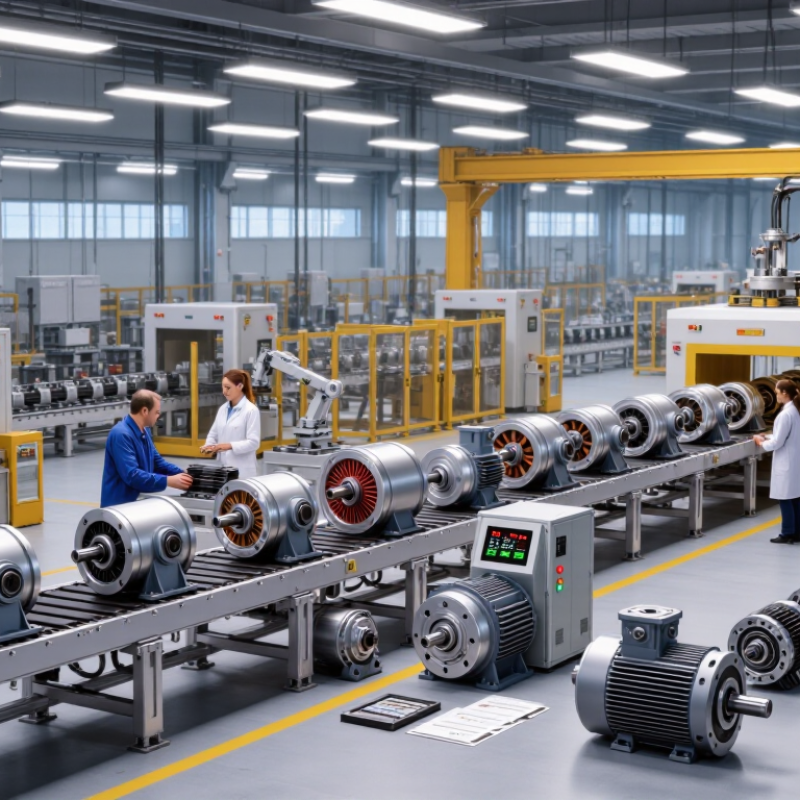
A low voltage gear motor combines an electric motor with a gearbox to deliver controlled rotation at reduced speed and increased torque. “Low voltage” commonly describes systems operating below 1,000 volts AC; compact equipment may instead use 12, 24, or 48 volts DC. The right choice depends on the power supply, load, duty cycle, and required speed—not voltage alone. Check the motor’s nameplate and the gearbox ratio before selecting a unit.
The gearbox’s gears turn fast motor rotation into slower output suited to tasks such as moving a conveyor belt or adjusting a machine gate. At a workbench, that difference is easy to see: a small output shaft can turn steadily while resisting a heavier load. IEA’s 2011 report, Energy-Efficiency Policy Opportunities for Electric Motor-Driven Systems, estimated that motor-driven systems used about 46% of global electricity. That figure covers many types of equipment, not gear motors alone, but it shows why efficiency and correct sizing matter. Too much torque capacity can add cost and bulk; too little may cause overheating or wear. A detail often missed: gearbox efficiency varies with design, load, and lubrication. Check the supplier’s rated torque, speed, voltage, and operating conditions. Specs can look neat on paper. Real loads are messier.
| Topic | Useful Facts and Data | What to Check When Evaluating a Supplier |
|---|---|---|
| What a low voltage gear motor is | A gear motor combines an electric motor with a gearbox to provide lower output speed and higher available output torque than the motor alone. “Low voltage” depends on the product and applicable electrical rules; common industrial and automation models include low-voltage DC versions and low-voltage AC versions. | Confirm the exact motor type, rated voltage, frequency or DC supply requirements, and whether the gearbox is integrated or supplied as a separate component. |
| Common supply voltages | Typical DC options include 12 V, 24 V, and 48 V. Common three-phase AC ratings include 220–240 V and 380–415 V, depending on the motor design and market. These are examples, not a complete list or a guarantee of availability. | Request the rated voltage, allowable voltage tolerance, phase, frequency, rated current, and wiring diagram for the specific model. |
| Speed reduction | Gear ratio determines the relationship between motor speed and gearbox output speed. For example, a 1,400 rpm motor with a 20:1 reduction ratio has a theoretical output speed of about 70 rpm before accounting for operating conditions. | Check the stated ratio, rated output speed, speed tolerance, and whether the quoted speed is measured at the rated electrical supply and load. |
| Torque and power | A useful approximate relationship is T = 9550 × P ÷ n, where T is torque in N·m, P is power in kW, and n is speed in rpm. At 0.2 kW and 70 rpm, the ideal calculated torque is about 27.3 N·m; actual output torque is lower after gearbox losses and depends on the motor and gearbox ratings. | Compare rated output torque, permissible peak torque, duty cycle, service factor, and gearbox efficiency. Do not select a unit using gear ratio alone. |
| Gearbox type | Common arrangements include helical, worm, planetary, and spur gearboxes. Their efficiency, backlash, size, noise, and load capabilities differ; the best option depends on the application. | Ask for the gearbox type, ratio range, backlash specification where relevant, lubrication method, mounting position, and maintenance requirements. |
| Duty and thermal limits | Motor output and permitted operating time depend on the rated duty, load, cooling, ambient temperature, and installation. A motor intended for intermittent use should not be assumed suitable for continuous operation. | Verify the duty rating, allowable ambient temperature, thermal protection, cooling method, and any derating requirements for the intended operating conditions. |
| Enclosure protection | IP ratings describe protection against access, solid objects, and water under specified test conditions. For example, IP54 indicates dust protection that is not complete dust-tightness and protection against splashing water. | Match the required IP rating to the actual environment. Request the rating for the complete motor assembly, not just an individual component. |
| Controls and feedback | Depending on the design, a gear motor may use an AC or DC supply and may be paired with a drive, brake, encoder, or other feedback device. These features are not included in every standard configuration. | Confirm which accessories are included, their electrical specifications, compatibility with the control system, and the available connection drawings. |
| Testing and documentation | Relevant records may include a datasheet, wiring diagram, inspection results, material information, and applicable conformity documents. Required documents depend on the product, destination market, and contract. | Ask for model-specific documents and test reports. Check that ratings and configuration details match the quotation and delivered unit. |
| How to identify a suitable supplier | There is no single “best” supplier for every application. Suitability depends on verified technical fit, consistent quality, production capability, communication, lead time, and after-sales support. | Compare written specifications, sample or pilot-test results, quality-control procedures, warranty terms, spare-parts availability, delivery commitments, and the supplier’s ability to support customization. |
Values shown are general selection guidance. Confirm the final ratings and limits against the datasheet for the exact gear motor configuration and application.
Check whether the supplier understands your required voltage, torque, speed, noise, and duty cycle. Request drawings, a production sample, and measured test results. A polished website proves little.
Test it under real working conditions. Measure current, temperature, noise, and output speed while it carries the expected load. Rated wattage alone is not enough.
Ask for batch inspection records, material traceability, and test reports tied to the exact motor model. Check voltage, frequency, and gearbox ratio. Details can get missed.
No. A quality certification can show that documented processes exist, but it does not guarantee every shipment. Compare actual batch records and sample performance.
Compare measured torque at your actual duty cycle, not just rated wattage. Review efficiency, temperature rise, noise, and no-load current. Small losses may matter across many machines.
Ask about winding inspection, gear backlash limits, lubrication, sealing, and final load testing. Sample serial numbers and calibration dates can make the evidence easier to check.
Compare engineering response times, spare-parts availability, warranty terms, and failure-analysis procedures. Request a written lead-time range and on-time delivery data. “Fast delivery” alone is vague.
Yes. Inspect shaft runout and gearbox temperature after continuous operation. Try a small design change and note how the supplier responds. I may be giving communication too much weight, but slow replies can become costly.
A Low Voltage Gear Motor combines a low-voltage electric motor with a gearbox to deliver controlled speed, increased torque, and dependable motion in a compact design. These motors are commonly used in conveyors, automated equipment, packaging systems, medical devices, agricultural machinery, and other applications where safety, energy efficiency, and precise movement are important. Selecting the right motor requires understanding the required voltage, torque, speed, duty cycle, mounting method, operating environment, and space limitations.
The best Chinese supplier is not simply the one offering the lowest price. Buyers should evaluate manufacturing experience, product consistency, testing procedures, certifications, customization capabilities, lead times, warranty terms, technical support, and communication efficiency. Comparing samples, inspection reports, production capacity, and after-sales service can reveal meaningful differences in quality and reliability. Ultimately, the best-fit supplier is one that provides a suitable Low Voltage Gear Motor, stable performance, transparent cooperation, responsive service, and a practical balance between cost and long-term value.
