Choosing the best Variable Speed Motor from China requires more than comparing prices and catalog pictures. The right decision starts with the application. Consider load type, speed range, torque demand, duty cycle, ambient temperature, and available power. A conveyor running eight hours daily needs different protection from a small workshop fan. Details matter.
Experienced buyers usually evaluate the motor, controller, and supplier together. Ask for rated power, insulation class, IP rating, efficiency data, noise levels, and thermal protection details. Request performance curves at several speeds, not only the maximum rating. Check whether the motor works smoothly with the intended drive. Compatibility problems can cause vibration, overheating, or early bearing failure. That is not enough.
Supplier credibility deserves equal attention. Review factory experience, production capacity, quality procedures, and traceable test records. A video tour helps, but an independent pre-shipment inspection offers stronger evidence. Confirm materials, bearings, wiring, labeling, packaging, and spare-part availability before payment. Product documentation should support the standards and certification requirements of the destination market. Local technical support also matters when settings need adjustment after installation.
A polished website can still hide gaps. No checklist is perfect. Samples should be tested under realistic conditions, including starting, stopping, speed changes, and continuous operation. Compare total ownership cost, not only the purchase price. A cheaper motor may consume more energy or require frequent service. Clear specifications, honest communication, and documented testing create a more reliable China sourcing decision. Mistakes remain possible, but careful verification makes them less expensive and easier to correct.
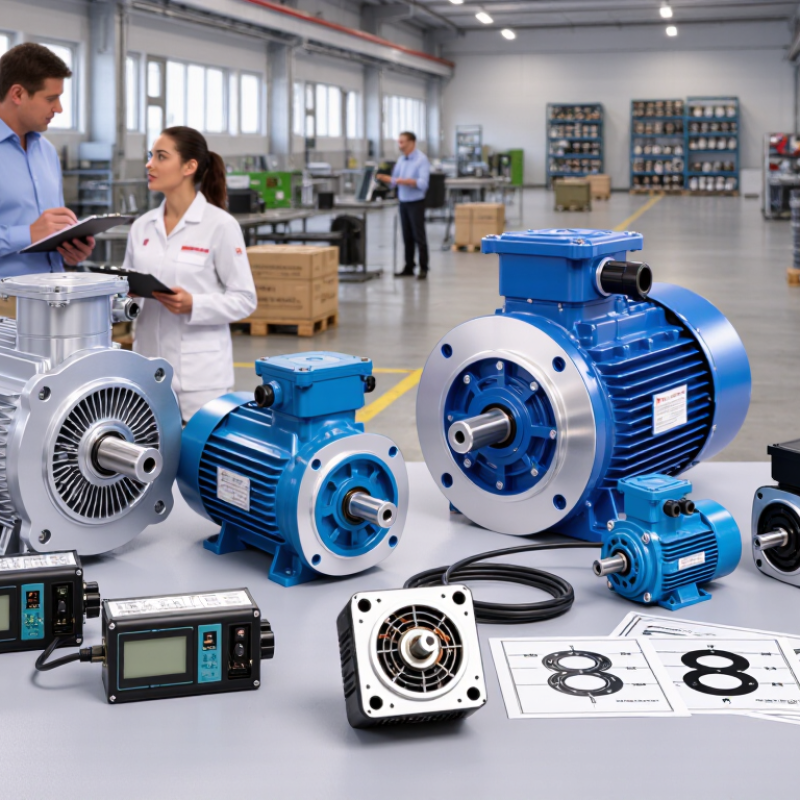
Define Variable-Speed Motor Types, Ratings, and IEC 60034-30-1 Classes
How to Choose the Best Variable Speed Motor from China?
Choosing a variable-speed motor requires more than comparing prices.
Define the motor type first. A three-phase induction motor suits many pumps, fans, and conveyors. A permanent-magnet motor can deliver higher efficiency and compact performance. Synchronous reluctance motors may reduce rotor losses, but their drive settings need careful matching. Check rated power, voltage, frequency, current, torque, and speed range. A motor designed for 50 Hz may not perform correctly across a wide inverter range. That detail is often missed.
IEC 60034-30-1 defines efficiency classes for line-operated motors under stated conditions.
IE2, IE3, and IE4 indicate increasing efficiency levels.
However, the class does not describe the entire variable-speed system. The inverter, cable length, cooling method, and operating profile also affect actual energy use. Ask for the efficiency test report, temperature-rise data, insulation class, IP rating, duty rating, and inverter-duty confirmation. Review the nameplate carefully. It should match the quotation and technical drawings. Small differences can create costly delays.
Tips:
Request a sample motor or witnessed factory test when the application is critical. Confirm low-speed cooling and starting torque with real load data. Verify documents independently when possible. Do not rely on efficiency labels alone. I have seen selections fail because the motor met IE3 requirements but overheated during continuous low-speed operation. Recheck assumptions before approval.
Compare IE3 and IE4 Efficiency, Including IEC 60034-30-1 Requirements
When choosing a variable speed motor from China, compare efficiency data, not only purchase price. IEC 60034-30-1 defines IE efficiency classes for line-operated AC motors. IE3 is the premium efficiency level, while IE4 is the super-premium level. However, efficiency limits vary by rated power, frequency, and pole number. There is no single IE3 or IE4 percentage.
A critical detail is often missed. IEC 60034-30-1 mainly covers line-operated motors, while inverter-fed motor performance may require IEC 60034-30-2. Ask the supplier for tested losses at the intended speed range. A motor marked IE4 at 50 Hz may perform differently at 25 Hz.
The IEA reports that electric motor systems consume roughly half of global electricity, making small efficiency improvements financially meaningful. Yet the cheapest motor can become expensive through heat, maintenance, and wasted electricity.
One practical lesson is uncomfortable: a certificate alone does not prove suitable variable-speed operation.
Tips:
Request an accredited test report, efficiency maps, insulation-class details, bearing limits, and inverter compatibility. Check whether the report matches the exact frame size and power rating. Compare total ownership cost over ten years. Include electricity tariffs, operating hours, and expected load. Also inspect factory quality records and sample-test procedures. I would not rely on catalogue claims alone; inconsistent documentation remains a real sourcing risk.
Match Motor Torque, Speed, Voltage, and 50/60 Hz VFD Compatibility
Choosing a variable speed motor from China starts with the load, not the catalogue price. A conveyor may require constant torque, while a pump often follows variable-torque demand. The U.S. Department of Energy reports that motor-driven equipment uses about 69% of industrial electricity. Correct sizing therefore affects operating cost significantly.
Check rated torque, starting torque, base speed, and maximum operating speed. A motor rated at 1,450 rpm for 50 Hz may behave differently at 60 Hz. Confirm the VFD’s output voltage matches the motor’s nameplate voltage, such as 380–400 V or 460 V. Frequency matters too. A 50/60 Hz VFD should support the required input and output settings, acceleration ramp, overload capacity, and braking method.
Low-speed operation needs special attention. Standard cooling fans may provide weak airflow below 30 Hz. An independent fan can prevent overheating during continuous low-speed work. Ask for inverter-duty insulation, bearing protection, temperature limits, and EMC test records. IEC 60034 standards provide useful reference points, but certificates alone cannot replace load testing. The IEA estimates that electric motor systems consume roughly 53% of global electricity, making efficiency claims worth checking carefully.
A practical mistake I often see is matching horsepower while ignoring torque. That choice can cause nuisance trips. I would request a witnessed test with the actual VFD, load profile, voltage, and frequency. Supplier documentation may look complete, yet one missing overload curve can change the decision. Test the details.
How to Choose the Best Variable Speed Motor from China? Match Motor Torque, Speed, Voltage, and 50/60 Hz VFD Compatibility
| Motor Output |
Typical IEC Frame |
Motor Design |
50 Hz Rated Voltage and Connection |
60 Hz Rated Voltage and Connection |
Rated Speed at 50 Hz |
Rated Speed at 60 Hz |
Rated Torque at 50 Hz |
Approx. 400 V Line Current |
Recommended VFD Operating Range |
Typical Application |
| 0.75 kW |
80M |
3-phase, 4-pole, squirrel-cage induction motor |
230/400 V
Δ/Y |
230/460 V
Δ/Y |
1,430–1,460 rpm |
1,720–1,760 rpm |
Approximately 4.9 N·m |
Approximately 1.8 A |
5–60 Hz, subject to motor cooling and drive settings |
Small conveyors, fans, pumps, mixers, and light machinery |
| 1.5 kW |
90L |
3-phase, 4-pole, squirrel-cage induction motor |
230/400 V
Δ/Y |
230/460 V
Δ/Y |
1,430–1,460 rpm |
1,720–1,760 rpm |
Approximately 9.9 N·m |
Approximately 3.4 A |
5–60 Hz, with an inverter-rated insulation system preferred |
Packaging equipment, small compressors, machine tools, and conveyors |
| 2.2 kW |
100L |
3-phase, 4-pole, squirrel-cage induction motor |
230/400 V
Δ/Y |
230/460 V
Δ/Y |
1,430–1,460 rpm |
1,720–1,760 rpm |
Approximately 14.5 N·m |
Approximately 4.8 A |
5–60 Hz for general duty; use a higher overload rating for heavy starting loads |
Material handling, pumps, blowers, and moderate-duty production lines |
| 4.0 kW |
112M |
3-phase, 4-pole, squirrel-cage induction motor |
230/400 V
Δ/Y |
230/460 V
Δ/Y |
1,450–1,480 rpm |
1,740–1,780 rpm |
Approximately 26.0 N·m |
Approximately 8.5 A |
5–60 Hz; forced ventilation may be required for extended low-speed operation |
Industrial conveyors, fans, pumps, extruders, and general machinery |
| 7.5 kW |
132M |
3-phase, 4-pole, squirrel-cage induction motor |
230/400 V
Δ/Y |
230/460 V
Δ/Y |
1,450–1,480 rpm |
1,740–1,780 rpm |
Approximately 48.5 N·m |
Approximately 15.5 A |
10–60 Hz; verify drive overload capacity and thermal protection |
Heavy conveyors, crushers, compressors, pumps, and processing machinery |
| 11.0 kW |
160M |
3-phase, 4-pole, squirrel-cage induction motor |
230/400 V
Δ/Y |
230/460 V
Δ/Y |
1,450–1,480 rpm |
1,740–1,780 rpm |
Approximately 71.0 N·m |
Approximately 22.0 A |
10–60 Hz; use an inverter-duty motor for frequent acceleration and deceleration |
Large conveyors, compressors, mixers, machine tools, and continuous-duty equipment |
|
Selection notes: Rated torque is estimated using T = 9550 × P ÷ n, where T is torque in N·m, P is motor output in kW, and n is speed in rpm. Actual values vary with efficiency, power factor, slip, temperature, and motor design. A 50/60 Hz VFD application must match the motor voltage, current, insulation system, overload requirement, acceleration profile, and cooling method. Below approximately 20–30 Hz, a standard self-cooled motor may require derating or independent forced ventilation. Confirm the motor nameplate data and VFD parameter settings before operation.
|
Verify IP55–IP66 Protection, Insulation Class F, and Cooling Performance
How to Choose the Best Variable Speed Motor from China?
When sourcing a variable speed motor from China, protection details deserve more than a catalog check. IP55 protects against dust and water jets, while IP66 offers stronger dust sealing and resistance to powerful water jets. Ask for the actual test standard, usually IEC 60529, not only an IP label. The rating applies to a correctly assembled motor. Cable glands, terminal boxes, and shaft seals can still become weak points.
Insulation Class F allows winding temperatures up to 155°C under defined conditions. However, Class F does not automatically mean superior reliability. Check the permitted temperature rise, ambient temperature, and insulation system used with an inverter. Request winding test records, dielectric strength results, and an inverter-duty specification. A clean document trail matters.
Cooling performance changes at low speed. A self-cooled motor may lose airflow when the fan turns slowly, causing winding temperature to rise. Check the cooling method, fan design, rated frequency range, and derating curve. For demanding applications, an independent forced fan may be safer. Measure temperature during a loaded trial, if possible. Do not trust no-load testing alone. It can look excellent.
One practical mistake is accepting a high IP rating without checking installation conditions. Dust, condensation, blocked ventilation, and frequent acceleration can defeat good design. Compare the sample motor with production records, inspection photos, and serial-number traceability. Ask uncomfortable questions. Silence is also information.
Evaluate Chinese Suppliers Through CCC, CE, ISO 9001, Testing, and Total Cost
Choosing a variable speed motor from China requires more than comparing catalog prices. The IEA’s Energy Efficiency 2017 report estimates that motor-driven systems consume nearly half of global electricity. Efficiency losses can therefore become a large operating expense. Ask suppliers for rated efficiency, power factor, speed range, overload capacity, and duty-cycle data. Check whether test results follow IEC 60034 methods, not only internal laboratory procedures. Small details matter, such as bearing temperature at continuous load.
Certification needs careful reading. CCC may be required for products entering applicable Chinese markets, while CE supports access to the European Economic Area when all relevant directives are met. ISO 9001 confirms a quality-management system, not automatic motor performance. Request current certificates, factory addresses, scope statements, and traceable serial numbers. An impressive certificate can still hide weak process control. Inspect calibration records and sample-based test reports.
Testing should include no-load current, locked-rotor behavior, vibration, noise, insulation resistance, and thermal rise. Independent verification is preferable for large orders. Total cost includes freight, commissioning, spare drives, software, downtime, energy use, and warranty handling. A 3% efficiency difference may look minor on paper, yet it can matter over thousands of operating hours. The U.S. Department of Energy repeatedly identifies motor systems as major industrial energy users. Still, calculations need your real load profile. This is where many purchasing models become too optimistic. Get a pilot unit, record power consumption, and compare measured data with the supplier’s quotation.
Conclusion
Choosing the best Variable Speed Motor from China requires more than comparing prices. Begin by identifying the correct motor type, power rating, speed range, and IEC 60034-30-1 efficiency class. Compare IE3 and IE4 models according to their energy performance and suitability for the intended application. The motor should also match the required torque, voltage, frequency, and VFD compatibility, including reliable operation on both 50 Hz and 60 Hz systems.
Protection and durability are equally important. Check for suitable IP55 to IP66 protection, Class F insulation, effective cooling, and stable performance under continuous or variable-load conditions. When evaluating Chinese suppliers, review CCC, CE, and ISO 9001 documentation, request routine and performance test reports, and confirm quality-control procedures. A complete decision should consider efficiency, service life, customization, warranty, delivery, maintenance, and total operating cost rather than purchase price alone. This structured approach helps buyers select a safe, efficient, and dependable motor for long-term use.
 Zentec Motor
