Zentec Motor Zentec Motor

Top Industrial Gear Motor Manufacturers for Global Buyers

Time:2026-09-10 Author:Amelia
0%

Choosing the right Industrial Gear Motor manufacturer affects production uptime, energy use, and long-term maintenance costs. Global buyers need more than a polished catalog or a low quoted price. They must examine torque ratings, gear ratios, motor efficiency, duty cycles, noise levels, thermal performance, and enclosure protection. A compact conveyor gearbox may face dust, vibration, washdown water, and continuous loading every day. Its real working conditions matter more than its showroom appearance.

Maintenance specialist John Moubray wrote, “Maintenance is about preserving the functions of assets.” This principle applies directly to Industrial Gear Motor selection. A reliable supplier should support the motor beyond delivery. Buyers should look for clear technical drawings, traceable testing, spare-parts availability, responsive engineers, and practical installation guidance. Factory audits, quality certifications, and documented load testing can strengthen confidence. They do not replace careful verification.

No ranking is perfect. Buyer priorities differ. A food-processing plant may value stainless-steel housings and hygienic design, while a warehouse automation project may prioritize precision, speed control, and rapid replacement. Some manufacturers offer impressive efficiency claims, yet their regional service network remains weak. That weakness can become expensive during an unexpected stoppage. This guide compares leading Industrial Gear Motor manufacturers for global buyers, considering product range, engineering capability, customization, reliability evidence, delivery support, and after-sales service. The comparison remains practical rather than absolute. Specifications can change, and local operating conditions may expose limitations that brochures overlook. Reliable decisions begin with evidence, not assumptions.
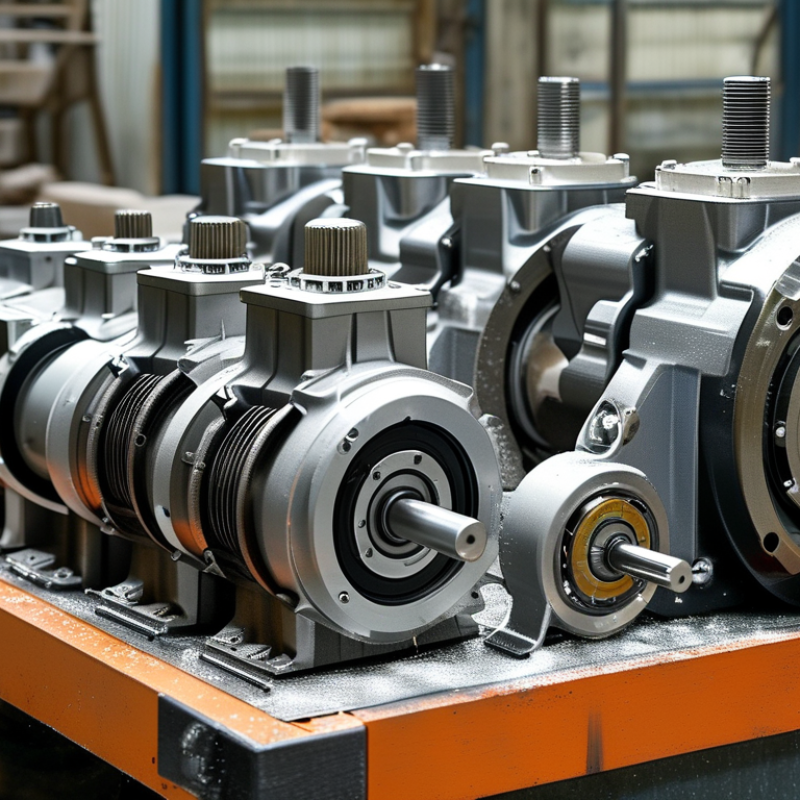
Top Industrial Gear Motor Manufacturers for Global Buyers

What Is an Industrial Gear Motor and How Does It Work?

An industrial gear motor combines an electric motor with a gearbox in one compact drive unit. The motor creates rotation, while the gears reduce speed and increase usable torque. This makes it suitable for conveyors, mixers, hoists, packaging lines, and automated material handling.

Inside the unit, electrical energy produces magnetic force in the motor’s stator and rotor. The rotor turns a high-speed input shaft. Gear stages then transfer motion through meshing teeth, often using helical, bevel, worm, or planetary designs. Each stage lowers output speed and raises torque, although friction creates heat and energy loss. The International Energy Agency reports that motor-driven systems consume about 46% of global electricity. That figure explains why correct sizing matters. A gearbox cannot rescue an undersized motor. A larger motor is not automatically efficient either.

Tips: Check output torque, service factor, duty cycle, mounting position, and ambient temperature. Compare rated efficiency at the real operating load, not only at full load. The U.S. Department of Energy notes that motor systems represent roughly 68% of industrial electricity use in the United States. In practice, alignment, lubrication, and contamination control often decide service life. A clean specification may still miss vibration or frequent starts. That is where field experience becomes valuable. Inspect unusual noise, rising temperature, and oil leakage before failure becomes expensive.

How to Assess Industrial Gear Motor Manufacturers

Assessing an industrial gear motor manufacturer requires more than comparing prices. Start with the application data: motor power, output torque, speed range, duty cycle, mounting position, and ambient temperature. A capable manufacturer should question missing details instead of issuing a quick quotation. That response reveals technical discipline.

Request drawings, material specifications, efficiency data, noise limits, and test records. Ask how each gearbox is inspected before shipment. Reliable suppliers can explain gear accuracy, bearing selection, lubrication, sealing, and thermal performance in plain language. Factory experience matters here. A production visit may reveal calibration records, assembly cleanliness, spare-parts storage, and actual testing equipment. Look for traceability on motors and gearboxes.

Samples should run under realistic loads, not only on an empty test bench. Measure temperature rise, vibration, starting current, output speed, and oil leakage after extended operation. Check whether the declared protection rating matches the enclosure and cable entries. Small inconsistencies matter. A polished brochure can still hide weak quality control, delayed service, or unstable component sourcing.

Review warranty terms, response times, installation guidance, and replacement procedures before signing a contract. Ask for references from applications with similar loads and operating hours. Some manufacturers provide impressive calculations but weak field support. That gap deserves attention. I would also compare three quotations using the same technical specification, because cheaper equipment can create higher maintenance costs. Leave room for doubt, and document every assumption.

Leading Manufacturer Types and Global Market Regions

Top Industrial Gear Motor Manufacturers for Global Buyers

Leading Manufacturer Types and Global Market Regions

Industrial gear motor suppliers usually fall into three groups: integrated producers, custom engineering firms, and regional assemblers. Integrated producers offer standardized helical, planetary, worm, and bevel gear motors. Their catalogs simplify replacement planning. Custom firms adapt shafts, brakes, housings, and mounting patterns for conveyors, mixers, and automated lines. Regional assemblers often provide shorter delivery times and flexible quantities. That advantage can hide inconsistent testing.

East Asia supports large-volume production and competitive pricing. Buyers should inspect heat-treatment records, noise measurements, and final-load testing. European manufacturers commonly emphasize efficiency classes, modular designs, and detailed technical documentation. North American suppliers often focus on aftermarket support, retrofit compatibility, and local inventory. India and Southeast Asia provide growing capacity for agricultural equipment, packaging, and material handling. Their quality levels vary widely.

The Middle East and Africa need suppliers prepared for heat, dust, voltage variation, and limited service access. Latin American buyers may value local partners who understand import procedures and spare-parts delays. A reliable evaluation compares torque curves, service factors, IP ratings, warranty terms, and response times. ISO 9001 certification helps, but it does not prove every motor is dependable. Ask for recent test reports and sample units. Perfect spreadsheets still miss field vibration. That deserves attention. I would also check gearbox temperature after continuous operation, because a quiet motor can still run too hot.

Key Product, Quality, and Customization Considerations

Top Industrial Gear Motor Manufacturers for Global Buyers

Selecting an industrial gear motor requires more than comparing catalog torque. Start with the driven load, operating hours, speed range, shock level, and mounting position. A conveyor moving wet aggregate needs different protection from a clean packaging line. Check rated torque, service factor, gearbox ratio, motor efficiency, brake options, and thermal limits. Small details matter. A motor that fits today may overheat after months of continuous operation.

Quality evidence should be practical and traceable. Ask how gears are heat-treated, measured, lubricated, and inspected before shipment. Reliable manufacturers can provide test records, dimensional drawings, noise data, and material documentation. Look for suitable ingress protection, consistent sealing, and clear tolerance information. Field experience also suggests checking spare-part availability and repair procedures. A polished datasheet is not enough. I have seen selection errors caused by assuming nominal torque equals real operating capacity.

Customization can improve performance when it solves a defined problem. Useful options include special shafts, flange dimensions, cable exits, encoders, holding brakes, coatings, voltage configurations, and food-contact-compatible surfaces where applicable. Provide the actual duty cycle and ambient conditions, not only the requested output speed. Prototype testing is valuable, especially when reversing loads or frequent starts are involved. Yet customization may increase lead time, documentation needs, and maintenance complexity. That trade-off deserves honest review. Reliable suppliers explain both the benefit and the limitation of each modification.

How Global Buyers Select and Purchase the Right Supplier

Top Industrial Gear Motor Manufacturers for Global Buyers

Global buyers rarely choose a gear motor supplier from price alone. They compare engineering evidence, production consistency, and after-sales support. I begin with the application: load, speed, duty cycle, installation space, and operating temperature. A supplier should provide clear torque curves, efficiency data, drawings, and material specifications. Ask for test records. Small details matter.

For a conveyor running twelve hours daily, I check rated torque, service factor, gearbox ratio, and motor protection rating. The output shaft must match the coupling without forced adjustment. I also inspect noise limits, lubrication requirements, thermal performance, and expected service life. Factory audits can reveal basic issues, such as poor storage or unclear assembly procedures. Photos help, but physical inspection is stronger evidence. Documents can be polished.

A reliable purchasing process includes sample testing before volume orders. Buyers should confirm lead times, packaging methods, warranty terms, spare-part availability, and technical response times. Payment conditions and delivery responsibilities also need written clarification. Do not judge capability from a fast quotation. One practical test is useful: send the same technical request to several suppliers and compare the questions they ask. Experienced engineers often identify missing operating data before proposing a model.

I once accepted an attractive offer without checking replacement-part timing. That decision caused avoidable downtime. Now I request a risk list with every quotation. It may feel excessive. It often exposes weak planning. Suppliers that explain limitations honestly usually deserve closer attention than those promising everything.

Top Industrial Gear Motor Manufacturers for Global Buyers - How Global Buyers Select and Purchase the Right Supplier

Selection Dimension What Global Buyers Should Compare Verifiable Technical Data Recommended Purchasing Evidence
Application and Load Profile Whether the gear motor can handle the driven machine’s torque, speed, starts, stops, shock loads, and operating hours. Required output torque in N·m, output speed in rpm, operating hours per day, starting frequency, load type, acceleration time, and duty cycle. Completed application data sheet, load calculation, duty-cycle confirmation, and written selection rationale.
Gearbox Configuration Suitability of the gear arrangement for space limits, efficiency, noise, backdriving behavior, and required torque range. Helical, bevel-helical, worm, planetary, or parallel-shaft design; reduction ratio; rated output torque; allowable radial and axial loads. Published performance curves, dimensional drawings, load ratings, and a stated service factor calculation.
Motor Efficiency Motor energy performance under the buyer’s operating point and local regulatory requirements. Efficiency class such as IE2, IE3, or IE4, declared according to IEC 60034-30-1; motor efficiency should not be confused with complete gear-motor efficiency. Motor nameplate, efficiency test report, applicable conformity documentation, and full-load efficiency data.
Electrical Compatibility Compatibility with the destination country, plant power system, starter, variable-frequency drive, and control architecture. Rated voltage, frequency, phase, rated current, connection method, insulation class, permissible frequency range, and inverter-duty requirements. Approved nameplate artwork, wiring diagram, terminal-box drawing, drive compatibility statement, and electrical test record.
Mounting and Mechanical Fit Interchangeability with the existing machine and correct alignment of the shaft, flange, feet, and mounting holes. Mounting position, shaft diameter, shaft extension, flange or foot dimensions, keyway details, rotation direction, and IEC frame information where applicable. Certified dimensional drawing, 3D CAD file, tolerance information, and first-article inspection report.
Environmental Protection Resistance to dust, water, washdown, humidity, corrosion, ambient temperature, and installation altitude. Ingress-protection rating under IEC 60529, ambient-temperature range, insulation system, paint or coating specification, and corrosion-protection method. IP test documentation, environmental operating limits, coating specification, and installation instructions.
Hazardous-Area Requirements Whether the complete motor and gear-motor assembly is approved for the specified gas, vapor, dust, zone, temperature class, and protection concept. Applicable hazardous-area classification, equipment protection level, gas or dust group, temperature class, and certification scope. Valid certificate, marking schedule, certificate number, installation conditions, and confirmation that accessories are included in the approval scope.
Thermal Performance and Lubrication Ability to dissipate heat and maintain lubricant performance at the required load, speed, orientation, and ambient temperature. Thermal rating, lubricant type, oil quantity, lubrication interval, permissible mounting positions, and maximum housing temperature. Lubrication manual, thermal-rating calculation, lubricant safety information, and maintenance schedule.
Quality and Testing Consistency of materials, machining, assembly, sealing, electrical performance, vibration, and noise. Material certificates, dimensional inspection, winding resistance, insulation resistance, no-load current, vibration, noise, and load-test results. Quality plan, inspection and test plan, sample test report, nonconformance process, and traceability records.
Standards and Documentation Whether the supplier can provide documentation accepted by the buyer’s engineering, legal, customs, and end-user teams. Relevant IEC motor standards, IEC 60529 enclosure rating, applicable machinery or electrical conformity requirements, and destination-market documentation. Datasheet, manual, declaration of conformity where applicable, certificate package, wiring diagram, spare-parts list, and export packing list.
Reliability and Serviceability Ease of inspection, seal replacement, bearing service, oil maintenance, troubleshooting, and spare-parts procurement. Bearing and seal identification, recommended inspection intervals, spare-parts coding, expected maintenance tasks, and repair instructions. Service manual, spare-parts price list, maintenance training plan, warranty terms, and escalation procedure.
Commercial and Logistics Evaluation Total landed cost rather than purchase price alone, including freight, duties, commissioning, energy, maintenance, and downtime risk. Incoterms, packaging dimensions, gross weight, customs classification, payment terms, warranty period, spare-parts availability, and quoted delivery schedule. Formal quotation, commercial invoice template, packing specification, warranty statement, delivery commitment, and total-cost-of-ownership comparison.
Supplier Qualification Manufacturing capability, process control, technical support, financial stability, and ability to support repeat global orders. Production capacity, quality-management certification status, engineering resources, inspection equipment, export experience, and corrective-action capability. Supplier questionnaire, audit report, reference project documentation without confidential customer data, factory acceptance plan, and approved-vendor review.

Note: Technical ratings must be confirmed against the specific gear-motor model, operating conditions, destination-market regulations, and the latest supplier documentation.

FAQS

: What application details should I provide before requesting a quotation?

: Provide motor power, output torque, speed range, duty cycle, mounting position, and ambient temperature. Missing details matter.

How can I judge a manufacturer’s technical discipline?

Notice whether the manufacturer asks precise questions before offering a price. A fast quotation may hide weak application analysis.

Which documents should I request?

Request drawings, material specifications, efficiency data, noise limits, and inspection records. Clear documentation supports better decisions.

What quality checks should a gear motor receive?

Ask about gear accuracy, bearing selection, lubrication, sealing, and thermal testing. Traceability is valuable.

Should I visit the production site?

A visit can reveal calibration records, clean assembly areas, testing equipment, and spare-parts storage. Photos are not enough.

How should I test a sample gear motor?

Run it under a realistic load, not only on an empty test bench. Measure temperature rise, vibration, starting current, output speed, and oil leakage.

Which customization options may solve real operating problems?

Useful options include special shafts, flange dimensions, cable exits, encoders, holding brakes, coatings, and voltage configurations. Customization has costs.

How should I compare quotations and after-sales support?

Compare at least three quotations using identical technical specifications. Review warranty terms, response times, installation guidance, replacement procedures, and spare-part availability.

What common selection mistake should buyers avoid?

Do not assume nominal torque equals actual operating capacity. Shock loads, frequent starts, heat, and long operating hours can change performance.

Is a polished datasheet enough evidence?

No. Check test records, field references, protection ratings, sealing, and repair procedures. No checklist is perfect. Leave room for doubt.

Conclusion

An Industrial Gear Motor combines an electric motor with a gearbox to deliver controlled speed, increased torque, and reliable mechanical power for demanding equipment. This article explains how these systems work and outlines the main factors global buyers should use when evaluating manufacturers, including engineering experience, production capacity, testing procedures, certifications, delivery reliability, and after-sales support. It also reviews common manufacturer types and regional market differences, helping buyers understand how supplier capabilities may vary across industries and locations.

The guide further examines essential product considerations such as gear configuration, motor efficiency, load requirements, operating environment, noise levels, service life, and maintenance needs. Customization options, technical communication, quality consistency, and documentation are equally important when selecting a long-term supplier. By comparing specifications, requesting samples or test data, reviewing manufacturing controls, and assessing total ownership costs, global buyers can choose an Industrial Gear Motor manufacturer that provides dependable performance, practical customization, and stable support for their specific applications.

Amelia

Amelia

Amelia is a seasoned marketing professional with a wealth of expertise in our company’s core offerings. With an unwavering passion for driving growth and innovation, she plays a pivotal role in shaping our marketing strategies and enhancing brand visibility. A key aspect of her responsibilities......